

And so, we turn FIVE! What a pleasure and an honour it is to bring to you this fantastic edition of Samyukta Fiction on the theme of forest. We received many entries and we thank all the writers for trusting us with their work. Our selected writers present four short stories that truly bejewel this extraordinary issue on a theme of great contemporary significance. What a delight to find four stories that are so different in style, tenor, and mood, and yet, each straining against the form of the short story, turning the theme to unusual dimensions, catching the light of revelation in unexpected, unforgettable ways!
Let me introduce you to our writers!
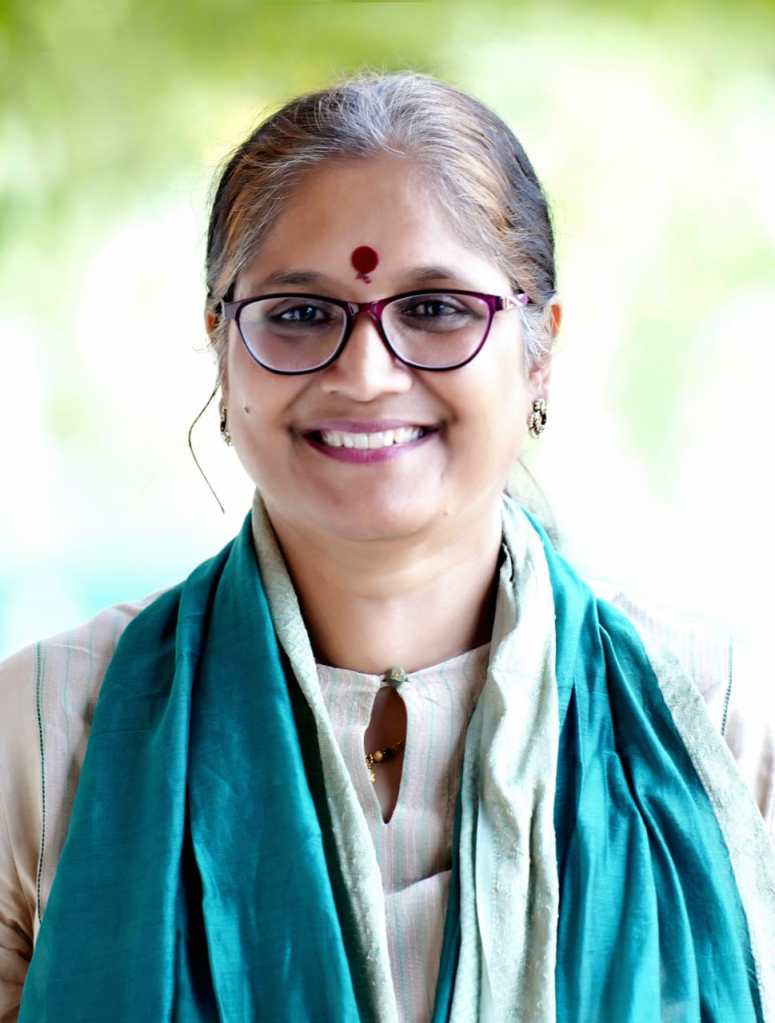
Paromita Goswami is a grassroots activist working on issues of land, forest and rural labour. Her short stories have been published in various magazines like Jaggery Lit, Out of Print, Himal Southasian, Meanpepper Vine, Muse India and Kitaab International. We are delighted to feature “A Death in the Forest,” which won the Rama Mehta Writing Grant Award (English), 2023. “A Death” is an atmospheric read: written with sympathy and insight, the tale bears the mark of Goswami’s years of working with rural and tribal communities as she writes as one from within the fold. Samyukta Fiction is delighted to be the first home of this award-winning story and readers may well recall the canonical Mahashweta Devi, such is Goswami’s assured narrative style and settled grace. A beautiful and poignant tale that will leave you in silent disarray.
“The trio entered the thick forest walking in a single file under shaded canopies. Along the way Katiya peeled the bark of the bartondi tree with his sharp iron knife, enough to fill a small polythene bag. His mood had lightened and he had already forgotten the previous day’s incident. This verdant forest was his safe world…”


In what is another first for Samyukta Fiction, I am elated to present the Bengali short story “Ballaali Baalaai” by Nalini Bera, translated by Hansda Sowvendra Shekhar. Nalini Bera is a celebrated name in contemporary Bengali literature. Amrit Kalash Yatra, Dui Bhuban, Epar Gonga Opar Gonga, Matir Mridongo, and Panchali are among the novels he has written. In 2008, he won the Bankim Puraskar, awarded by the Government of West Bengal, for his novel, Sabar Charit; and the Ananda Puraskar, awarded by the Anandabazar Patrika Group, in the year 2019 for his novel, Subarnarenu Subarnarekha. Bera is currently based in Howrah, West Bengal, and is the President of the literature festival, Bishwa Bangla Sahitya O Sanskriti Utsab.
Hansda Sowvendra Shekhar writes in English; translates into English from Santali (his mother tongue), Hindi, and Bengali; and occasionally translates from English to Hindi. Gold River, his translation of Nalini Bera’s Ananda Puraskar-winning Bengali novel, Subarnarenu Subarnarekha, is currently in the submission stage. Shekhar is himself a well-known novelist, having won the 2015 Yuva Puraskar for his first novel, The Mysterious Ailment of Rupi Baskey. He is the author of acclaimed books, The Adivasi Will Not Dance (2016), the children’s book, Jwala Kumar and the Gift of Fire: Adventures in Champakbagh (2019), and the sumptuously written My Father’s Garden (2019). Most recently, his novel I Named my Sister Silence (2023) has received glowing reviews.
Bera’s tale “Ballaali Baalaai” was first published in Bengali in Bartaman Sharodiya (2023), and we are delighted to present it in Shekhar’s translation, “Ballal’s Bother.” The contradictions and paradoxes of India’s labyrinthine bureaucracy usually provide the platform for tragic tales of rural and tribal misgovernance. But Bera’s shining light and benign humanism pervades the tragic and sorrowful, as the confusions and misunderstandings of life take on both local and universal piquancy. Bera captures, pitch-perfect in Shekhar’s stellar translation, the wry smile behind our most abiding tragedies: while reading it, if you recall the comic genius of a Gogol or a Basheer, it will be no surprise: “Ballal’s Bother” is an unforgettable tale in the long august tradition of the short story.
“Ballal Murmu could understand nothing of it, but he was sure that something was happening or something had already happened. His house was not very far. He could see his bamboo groves, the plain bamboo and the spiny bamboo. The sun had set, but it wasn’t dark yet. The fireflies hadn’t started glowing.”
Rimi B. Chatterjee is a screenwriter, novelist, graphic artist and academic living in Kolkata, India. She is the winner of the Utopia Award (2023) for her novelette, Reckoning. She has been developing the Antisense Universe since 2005, a storyworld focused on climate action, postcapitalism and civilisational redesign, and is currently working on a range of screenplays, graphic short forms and other content set in this universe. Chatterjee’s story, “The Mudpie,” is a tour de force in telling, featuring characters that appear in her novella Arisudan. A buddy-tale, an ecofiction, speculative fantasy, call it what you will. Inventive, world-building, and truly original, “The Mudpie” is like a barrage in your head – watch out for its fire!
‘Got it. And…be careful. I don’t want to have to explain to Bilqis Bintam I let you kill yourself to save a mangrove forest.’ Carlton smiled. ‘She’ll understand. Everyone in Climate Town knows what we’re fighting for. She’d do the same in my place. I know it. ‘Don’t die, Carlton. Just…don’t fucking die.’


Chitra Gopalakrishnan is a New Delhi-based writer and poet, interested, in her own words, in “narratology and psychoanalysis, marginalia and manuscript and tree-ism and capitalism.” Her story, Waldeinsamkeit, is an immersive read, and easily among the most synaesthetic entries we have received in Samyukta Fiction. Gopalakrishnan’s limpid prose brings alive the undying pleasures of a forest that you can taste, smell, touch, and dissolve into. But even our most sacred images of a sylvan world are but a frail shelter from the universal travails of life. Like Hansel and Gretel, we follow the crumbs Gopalakrishnan leaves for us as we enter this mesmerizing forest …
“The grass is forest-green, the creepers parakeet-green, the lichens olive-green, shrubs of wild garlic and basil chartreuse-green, the water within mud puddles moss-green, the slimy, bulgy-eyed frogs’ a lurid, neon-green, and the undersides of the Himalayan barbets, that fly in a group with a rush of wings, an assortment of green tints.”
What a great issue to put together – with so many firsts for Samyukta Fiction! Dear Readers, I hope you enjoy Issue 5; please write to us your views and show our writers your love by leaving comments and writing directly to them on their emails provided. Don’t miss “Our Authors Read” page either!
Until then, au revoir!

 SAMYUKTA FICTION